Batavia: Commercial Prosperity in the Shadow of Monopoly
Reported by Fakhrizal Fakhri | Translated by Nugroho Adibrata
Batavia was once a major commercial crossroads in Asia, where ships from across the world anchored with spices and goods, linking the archipelago to global trade. Behind that vibrant commerce, however, operated a trading syndicate that went far beyond controlling markets—it ruled over territories and people's everyday lives.
There, in the Spice Islands, the Dutch are said to burn all the spiceries
Two and a half centuries ago, Scottish philosopher and economist Adam Smith warned against precisely this model. In his 1776 treatise The Wealth of Nations, Smith critiqued the perils of chartered monopolies wielding sovereign political authority—pointing directly to the Dutch East India Company, the Vereenigde Oostindische Compagnie (VOC).
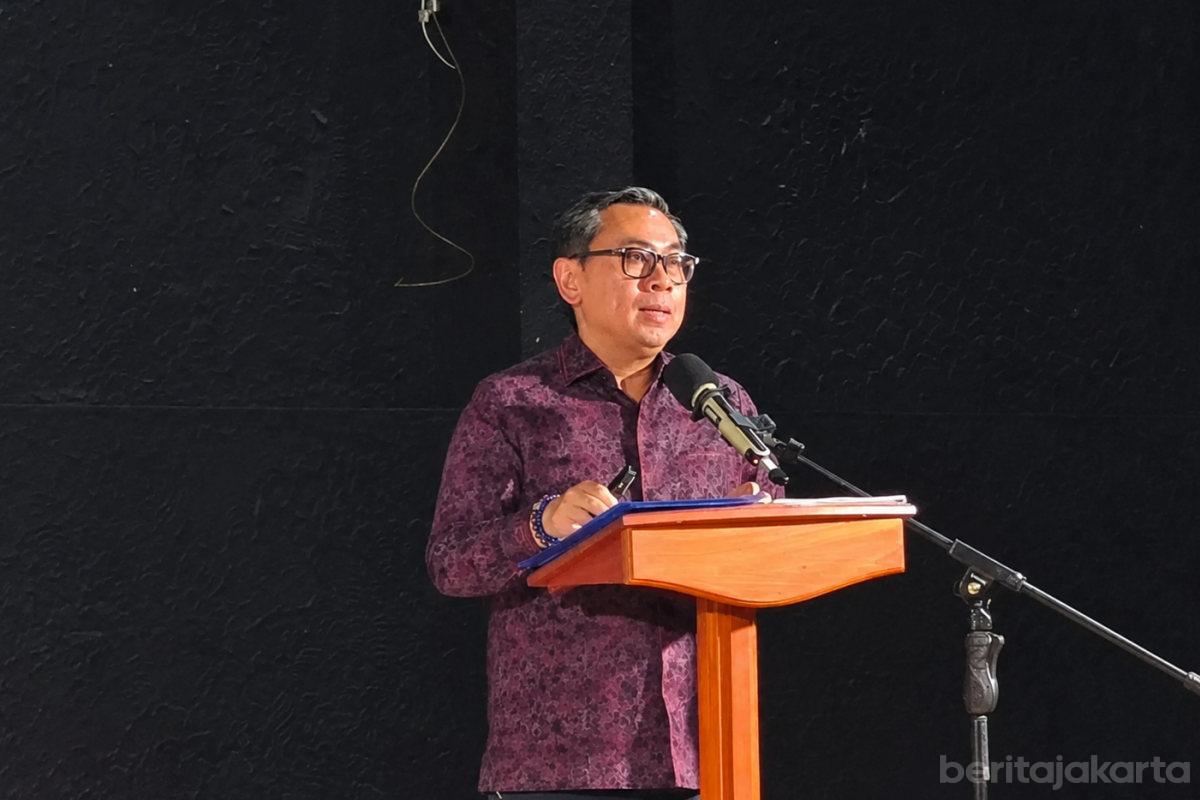
Special Staff Deputy Coordinator to Jakarta Governor and Vice Governor, Yustinus Prastowo invited audiences to look beyond Adam Smith's reputation as a free-market economist and recognize him as a sharp critic of unchecked corporate power.
Royal Batavia Cakung Hospital Construction Set to Begin in December 2026"The government of an exclusive company of merchants is, perhaps, the worst of all governments for any country whatever," Prastowo expressed, quoting The Wealth of Nations during a public lecture titled From Batavia to Jakarta—Adam Smith 250 Years Ahead at Teater Utan Kayu, Matraman, East Jakarta.
Through this critique, Smith underscored the peril of concentrating commercial motives and political authority in the same hands. Rather than simply pursuing profit, a corporation armed with state power can weaponize governance to entrench monopolies and stifle competition—sidelining the public interest while leaving ordinary residents to pay the price.
Smith cited Batavia as a prime example of strategic commerce in the East Indies, likening its pivotal role to the Cape of Good Hope on the maritime routes between Europe and Asia. From Batavia, trade networks radiated across major hubs including Hindustan, China, Japan, Tonkin, Malacca, and Sulawesi.
Yet that strategic advantage did not translate into broad-based prosperity for local residents. Instead, Smith pointed out how the VOC manipulated trade, output, and pricing to protect its margins—burning surplus harvests in the Spice Islands to keep prices artificially high and tightly restricting clove and nutmeg production to preserve its monopoly.
"There, in the Spice Islands, the Dutch are said to burn all the spiceries which a fertile season produces beyond what they expect to dispose of there with such a profit as they think sufficient," Prastowo remarked, quoting Smith.
These practices did far more than distort markets—they devastated local populations. As Smith documented, the inhabitants of several islands were reduced to the bare minimum needed to sustain commodity output for the VOC.
Batavia's history shows how commerce can become an engine of oppression when economic power goes unchecked. For Smith, trade itself was never the enemy; rather, he saw it as a catalyst for shared prosperity. Yet when monopolies and political power collude to protect the interests of a few, those gains are hollowed out.
Smith's critique extended well beyond the VOC. He was equally wary of other chartered giants, such as the British East India Company (EIC), which risked abusing political power in much the same way.
His insights were rooted in close observation of the emerging commercial society of his time. Serving as a Commissioner of Customs in Scotland starting in 1778 gave him firsthand exposure to the realities of trade, imports and exports, state administration, and economic policy.
Prastowo noted that Smith is frequently reduced to a one-dimensional champion of laissez-faire capitalism—when in fact, he forcefully warned against monopolies, corporate collusion, and business interests capturing public policy for private gain.
In The Wealth of Nations, Smith even cautioned that whenever people of the same trade meet together, their conversations risk ending in collusion against the public interest.
Two and a half centuries after the book's publication, Batavia has evolved into Jakarta—Indonesia's hub of governance, commerce, and economic life. Still, the core questions Smith left behind remain as urgent as ever: who controls the resources, who captures the gains, and how accountable is economic power to the people?.
As Jakarta approaches its fifth century, Batavia's history reminds us that progress cannot be measured by economic growth and bustling trade alone—how power is governed and how firmly it serves the public interest equally define true prosperity.
Adam Smith's critique of the VOC goes far beyond a footnote of colonial history. It stands as a warning that when unchecked economic and political power align, ordinary people risk paying the heaviest price.
Two and a half centuries on, the question still echoes: does economic power serve the public, or is the public left bearing the burden of private interests?.